by Eric Christianson | Sep 16, 2026 | Neurology, Pain, and Musculoskeletal Medication and Disease State Clinical Pearls
While tramadol is classified as an opioid, there are many practice pearls that make it unique from other traditional opioids. In this blog post, I’ll share my top 5 tramadol practice pearls. Tramadol has weak mu-opioid receptor activity, but it also inhibits the...
by Eric Christianson | Sep 9, 2026 | Neurology, Pain, and Musculoskeletal Medication and Disease State Clinical Pearls
In my practice, I most often see amantadine used for dyskinesia and motor symptoms associated with Parkinson’s. It can also be used for medication-induced Parkinsonism. In general, amantadine is not a first-line agent for treating movement disorders, but I think...
by Eric Christianson | Aug 16, 2026 | Neurology, Pain, and Musculoskeletal Medication and Disease State Clinical Pearls
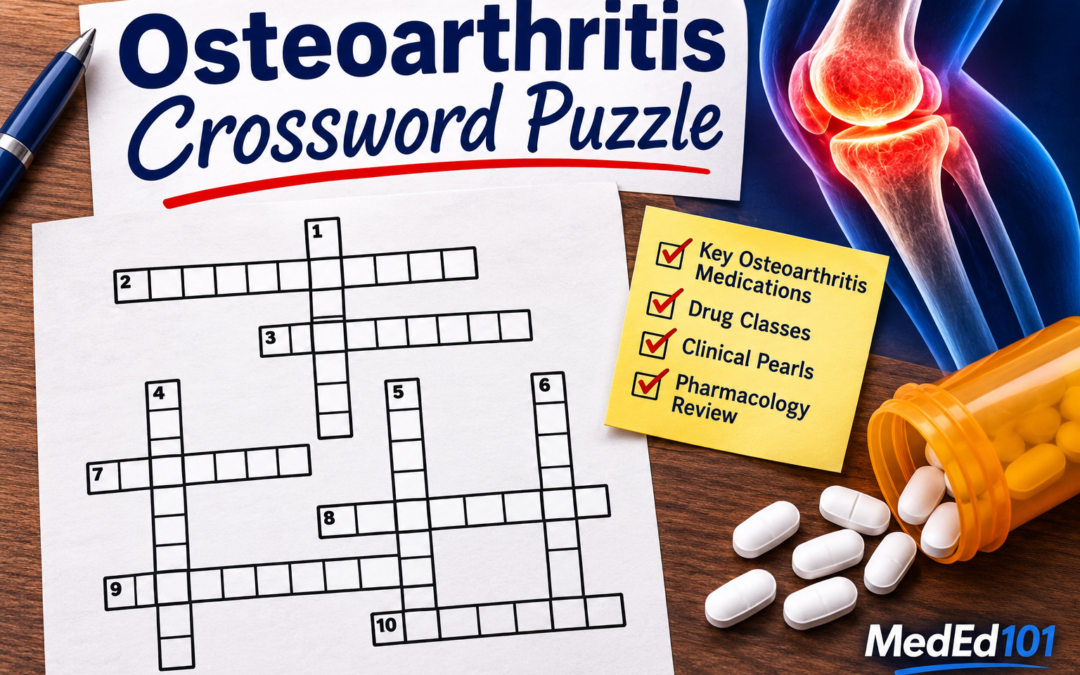
Osteoarthritis is one of the most common causes of chronic joint pain, and pharmacists and other healthcare professionals encounter medications for osteoarthritis on a regular basis. From NSAIDs and topical therapies to duloxetine, corticosteroid injections, and other...
by Eric Christianson | Aug 5, 2026 | Neurology, Pain, and Musculoskeletal Medication and Disease State Clinical Pearls
I’m always on the lookout for new options to treat pain. This is especially true in geriatrics, where opioids and NSAIDs have a bunch of risks. Suzetrigine (Journavx) represents a newer option in pain management in recent years because it introduces an entirely...
by Eric Christianson | Jun 21, 2026 | Neurology, Pain, and Musculoskeletal Medication and Disease State Clinical Pearls
Tizanidine is a centrally acting alpha-2 adrenergic agonist commonly used for the management of muscle spasticity. While it can be an effective medication for reducing muscle tone and improving function in select patients, it also carries significant risks that...
by Eric Christianson | Feb 8, 2026 | Neurology, Pain, and Musculoskeletal Medication and Disease State Clinical Pearls
Oral bisphosphonates (i.e., alendronate) are commonly used to treat osteoporosis, and proper administration is one of the most important concepts for the NAPLEX exam. These medications must be taken first thing in the morning on an empty stomach with a full glass of...