by Eric Christianson | Jun 3, 2026 | Respiratory Case Studies
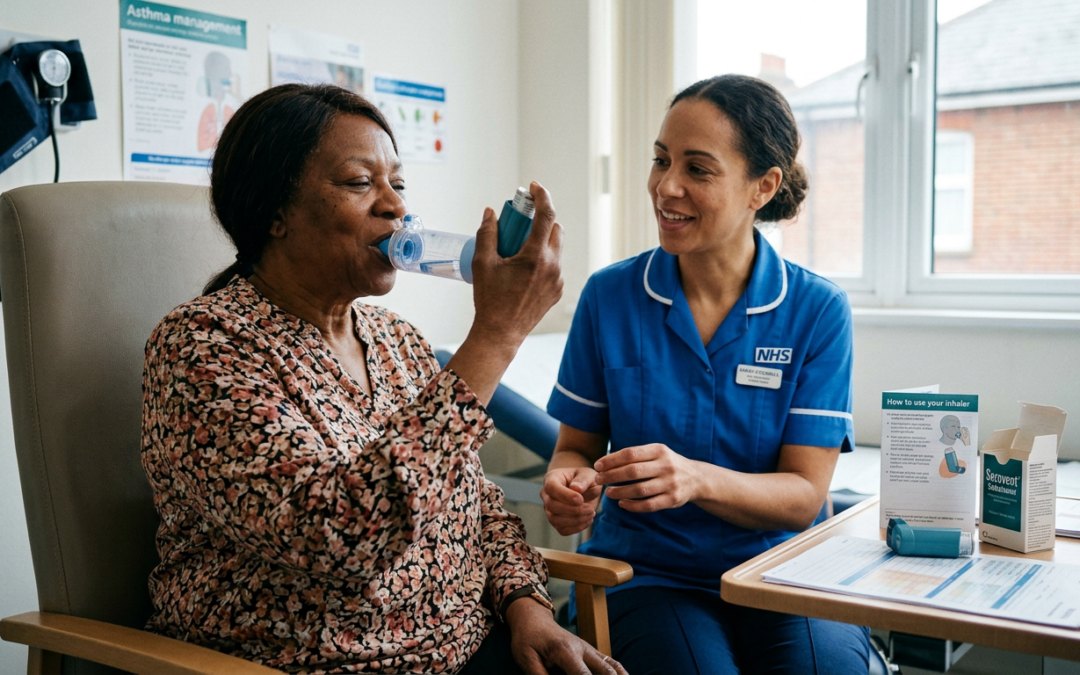
A 54-year-old female with a history of moderate persistent asthma presented to the hospital with worsening shortness of breath, wheezing, and nighttime cough. Over the previous week, she had been using her rescue inhaler six to eight times daily before ultimately...
by Eric Christianson | May 31, 2026 | Endocrine Medication and Disease State Clinical Pearls
Weight loss medications can differ substantially in efficacy, adverse effect profiles, and monitoring considerations, making patient-specific counseling essential. In this blog post, I share common practice pearls for weight loss medications. GLP-1 Type Agents Slow...
by Eric Christianson | May 27, 2026 | Gastrointestinal Case Studies
NSAIDs are a notorious cause of GI bleeds. This is something that I am significantly concerned about as a geriatric consultant pharmacist. In this blog post, I share 3 examples of NSAIDs causing GI bleeds that I have seen in practice. Scenario 1 – Duplicate...
by Eric Christianson | May 24, 2026 | Psychiatry and Addiction Medication and Disease State Clinical Pearls
When you are studying for your exams, be sure to take a good, hard look at paroxetine. While it can be effective for anxiety disorders, panic disorder, depression, and PTSD, its pharmacokinetic and adverse effect profile creates several important clinical...
by Eric Christianson | May 20, 2026 | Renal, Urology, and Electrolytes Medication and Disease State Clinical Pearls
A patient I was following had a sodium level of 132 mEq/L and a student asked me how much we should worry about this? It is a bit of a deep question, but in general, a slightly low sodium level of 132 is not going to be a life-threatening situation. Here are some of...